Aging Infrastructure: Recognizing and Managing Failures in Older Facilities Picture This

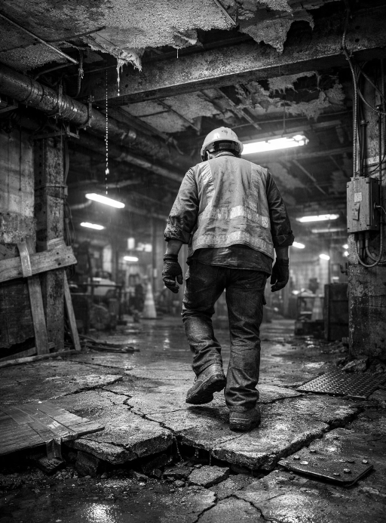
This image shows a worker moving through an older facility where daily operations continue as usual, but the warning signs are everywhere—if you know where to look. The floor beneath their feet is uneven and cracked, with areas that appear worn and patched over time. Overhead, sections of the ceiling show water stains and sagging materials, while rusted beams and supports reveal years of deterioration. The worker steps onto a section of flooring that looks solid on the surface, unaware that the structure underneath has weakened. Nearby, temporary fixes and makeshift repairs suggest problems have been addressed quickly, not properly. Everything appears functional—but the integrity of the structure is already compromised.
In aging facilities, failure rarely announces itself before it happens. Damage builds over time—hidden in floors, walls, and supports—until one moment, under normal use, everything gives way. What makes these hazards so dangerous is that they often look safe right up until the point of collapse. Without proper inspections, load assessments, and maintenance, workers are left relying on assumptions instead of facts. One step onto a weakened surface, one shift in weight, one overlooked warning sign—and a routine task can turn into a serious or fatal incident. Always treat aging infrastructure as a potential hazard, not a stable environment.