Augmented Reality for Safety: Reality Check on Tech Implementation Picture This

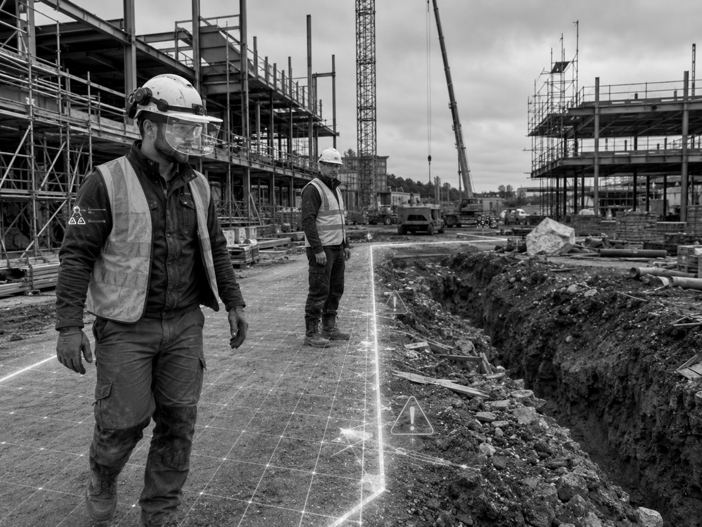
This image shows a construction worker on an active job site wearing an AR smart helmet with a heads-up display visible through the visor. The display is overlaying digital safety markers and hazard zones onto his view of the work area. He is moving confidently through a section of the site, eyes on the display rather than the environment around him. What the AR system has not flagged — and what he is not independently looking for — is a freshly excavated trench just beyond the marked zone, partially obscured by construction debris. A coworker nearby assumes the AR system has already communicated the trench hazard to everyone in the area. Neither worker stops to verify.
This image does not show a device that has broken down or a worker who is being reckless. It shows something more common and more dangerous — a worker who trusts the technology completely and a team that has stopped checking for what the system might have missed. AR safety tools are built on data, sensors, and software that have limits, blind spots, and failure modes that are not always visible to the person wearing the device. A hazard the system was not programmed to detect, has not been updated to recognize, or simply failed to flag in that moment is still a hazard. Technology supports safe work — it does not replace the responsibility to look, think, and verify independently on every task, every shift, every day.