Climate Adaptation on Site: Floods, Wildfire Smoke, Extreme Weather Picture This

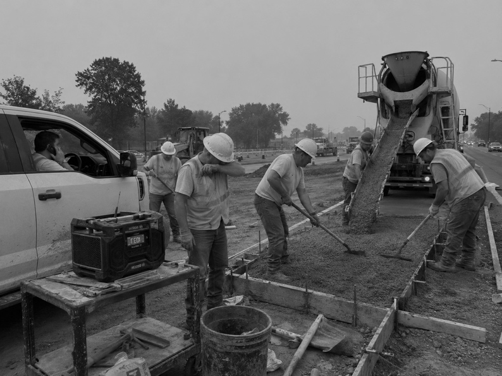
This image shows an outdoor construction site on a hazy summer afternoon. A crew of six workers is continuing to pour and form concrete along a roadway despite a thick orange-brown haze hanging low in the sky above them — the visible signature of wildfire smoke that has moved into the region overnight. No one on the crew is wearing a respirator. A portable radio on a nearby equipment cart is broadcasting an air quality alert, but no one has stopped to listen. One worker is visibly struggling, pausing to cough into his sleeve before returning to the pour. A supervisor is on the phone in the shade of a truck cab. There is no stop-work sign, no air quality monitor, and no visible guidance posted anywhere on the site about what to do when conditions like these occur.
Wildfire smoke contains fine particulate matter, carbon monoxide, benzene, and other toxic compounds that penetrate deep into the lungs and bloodstream — causing respiratory failure, cardiovascular damage, and in cases of prolonged exposure, permanent lung disease. Extreme heat layered on top of poor air quality accelerates the body’s deterioration, increasing the risk of heat stroke and cardiac events. Flooded worksites introduce electrical shock from submerged equipment, waterborne pathogens, and structural instability that can collapse without warning. These hazards share one critical feature — they escalate faster than workers can adapt if no monitoring or response plan exists. To prevent harm, employers must check air quality readings before and throughout every shift, establish clear AQI thresholds that trigger respirator use or work stoppage, provide NIOSH-approved N95 respirators whenever AQI exceeds safe levels, and ensure every worker knows they have the right to refuse work in conditions that endanger their health. A plan that exists only on paper protects no one.