Contractor to Employee: Maintaining Standards Across Workforce Types Picture This

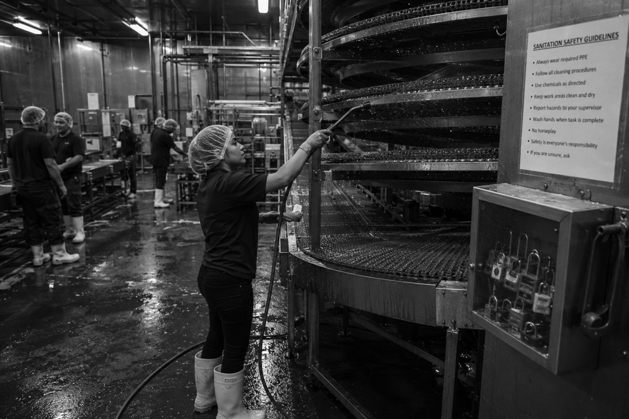
This image shows the overnight sanitation shift at a large frozen food manufacturing facility. A young woman in a hairnet, gloves, and basic work clothes is using a compressed air hose to clean a spiral conveyor system that is still moving. No lockout device has been applied to the machine. No stop procedure has been initiated. Around her, other sanitation workers are cleaning different sections of the line — most of them speaking Spanish among themselves. A laminated safety instruction sheet is posted on the wall nearby, printed entirely in English. No supervisor is present in the immediate area. A lock box mounted near the conveyor sits unused, its locks still inside.
This worker did not refuse to follow a procedure. She was never given one. She was not provided a lock. She was not trained to stop the machine before cleaning it. She arrived at this facility through a staffing agency, was assigned to the overnight shift, and began work in an environment where the hazards were real, documented, and already responsible for two previous amputations — none of which had been communicated to her in a language she could understand. A temporary worker is not a different category of worker — they are a worker. The obligation to train, equip, and protect them begins before their first shift starts, not after something goes wrong. Every person who sets foot on a job site must know the hazards, know the procedures, and have the tools and authority to protect themselves — regardless of who signs their paycheck or what language they speak.