Drone Inspections: When Observers Become Participants in Hazards Picture This

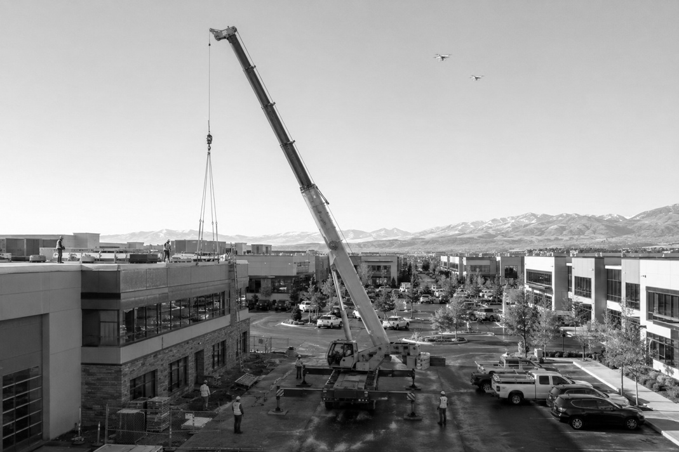
This image shows a construction crane operator seated in the cab of his crane, performing roof work on a commercial building in a busy business park on a clear morning. His focus is entirely on the load he is managing — rigging, positioning, communicating with the crew below. The sky above him is open and unmonitored. Two small delivery drones are visible in the background, flying in a straight northeast path at approximately 200 feet altitude, returning to a nearby warehouse. The drones’ flight path intersects directly with the crane’s extended boom. The operator has no warning system, no airspace alert, and no way to know the drones are approaching. Neither drone’s obstacle-detection system has flagged the crane as an obstruction.
What happens next takes seconds. The first drone strikes the boom. The operator feels the impact and looks up. The second strikes within minutes. Both drones catch fire and fall into the parking lots below, where other workers and pedestrians are present. One person is treated for smoke inhalation. The crane operator — who was doing everything correctly, on a permitted worksite, operating licensed equipment — became a participant in a drone incident he had no role in creating and no way to prevent. Drones operating autonomously in shared airspace do not distinguish between an empty field and an active construction site. Every worksite in a drone flight corridor must know that airspace is in use, must have a protocol for reporting aerial obstructions, and must give workers on the ground the authority and the means to stop work when unidentified objects enter their zone without warning.