Green Energy Worksites: Solar, Wind, Battery Storage and Worker Hazards Picture This

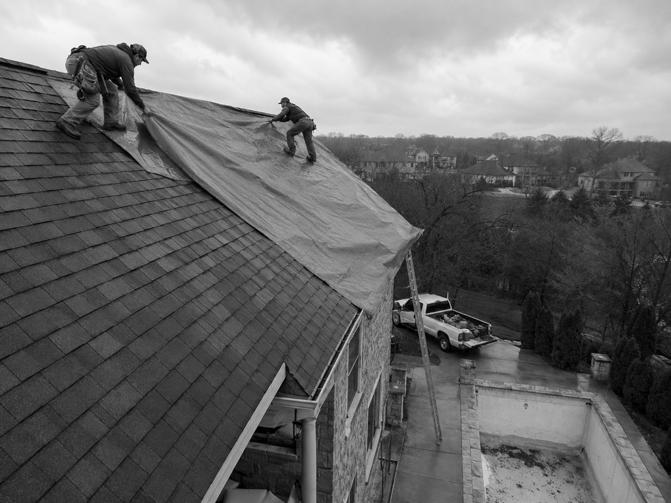
This image shows two workers on the pitched roof of a two-story residential home on a cloudy afternoon. They are installing a tarp across a section of the roof, moving quickly across the surface without any harnesses, lanyards, or anchor points visible anywhere. The roof pitch is steep. The edge of the roof drops directly to a concrete patio below where an empty swimming pool sits at ground level. No warning lines, safety nets, or toe boards are in place at the roof edge. A ladder leans against the side of the house — the only access point to the roof — with no one stationed at its base. A company truck is parked in the driveway with equipment in the bed, but no fall protection gear has been unloaded.
Both workers on this roof are focused entirely on getting the tarp in place. Neither is thinking about the edge, because neither has been trained to think about the edge — and neither has been given the equipment that would make falling survivable. A steep roof, a slippery surface, and 20 feet of air between a worker and a concrete pool deck is not a manageable situation without fall protection. It is a fatal one. Green energy and roofing work sit among the highest-risk environments in any industry, and the hazard does not change based on how short the job is or how quickly it needs to be done. Every worker above six feet requires fall protection, every time, on every surface — regardless of what the job is called or how long it takes.