Incident Investigation Refresh: Making the Most of What Happened Picture This

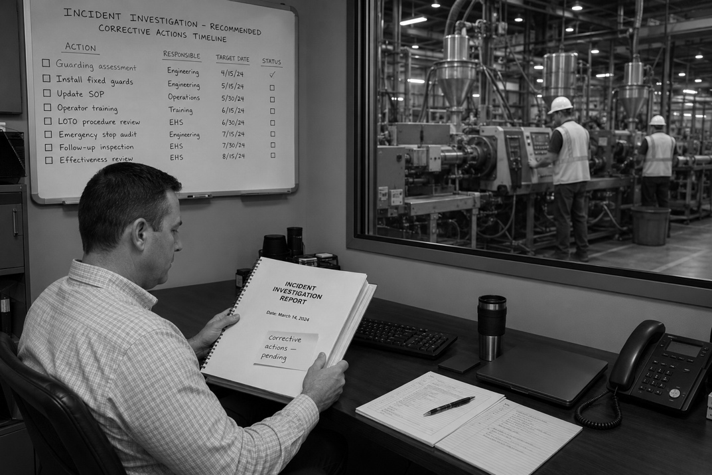
This image shows a corporate safety office where a supervisor is seated at a desk reviewing a printed incident investigation report from a fatality that occurred the previous year. The report is thick, professionally bound, and clearly marked with the date and findings. A sticky note on the front cover reads “corrective actions — pending.” Behind the supervisor, a whiteboard shows a timeline of recommended fixes from the investigation, several items unchecked. Through a window in the background, the plant floor is visible — workers are operating plastic extrusion equipment, the same type of machine identified in the report as a hazard in need of safety improvements. No guarding changes have been made. No lockout procedure is posted at the machine. The investigation has been completed. The hazard has not.
This is what an unfinished investigation looks like — not chaos, not negligence that is easy to see, but a report on a desk and a hazard still running on the floor below. Finding a problem is not the same as fixing it. Recommending a corrective action is not the same as implementing and verifying one. Every incident investigation must move past the report stage to the point where the hazard has been physically controlled, the fix has been confirmed, and workers are no longer exposed to the same conditions that caused the last injury. A documented finding that was never acted on does not protect the next worker — it only proves the hazard was known.