Material Storage: Pallets, Racks, Overlots and Falling Objects Picture This

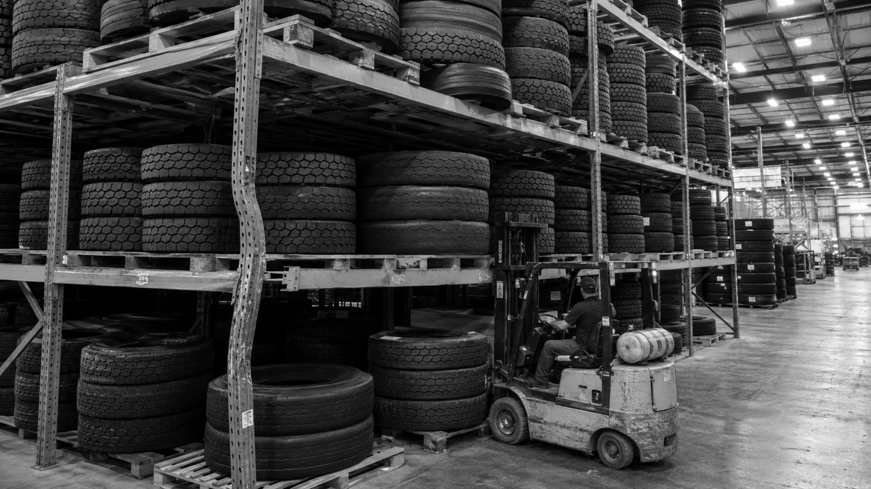
This image shows the interior of a large tire distribution warehouse during an active shift. A forklift operator is working in a storage aisle beneath a three-tier pallet rack system loaded with heavy industrial truck tires stacked well above the 16-foot limit. The rack’s vertical uprights show visible damage — a bent upright on one side, scuff marks consistent with prior forklift impacts. The horizontal beam locks on the middle tier are missing on one side, leaving the beam unseated. The pallets on the upper tier are unbanded, with tires stacked unevenly and slightly overhanging the edge. The operator below is focused on retrieving a pallet at ground level, positioned directly beneath the compromised upper tier.
Nothing in this image looks like an emergency in progress — and that is the most dangerous part. The rack has been damaged before. The beam locks have been missing for some time. The overheight, unbanded load has been sitting there through multiple shifts. Each day that passes without an inspection or a repair normalizes the hazard, until the moment the structure can no longer hold and a worker underneath pays for every ignored warning sign. Damaged racks must be reported, tagged, and taken out of service immediately — not at the end of the shift, not after the next delivery. The load does not wait for a convenient time to fall.