Micro-breaks & Recovery: Preventing Fatigue and Overuse Injury Picture This

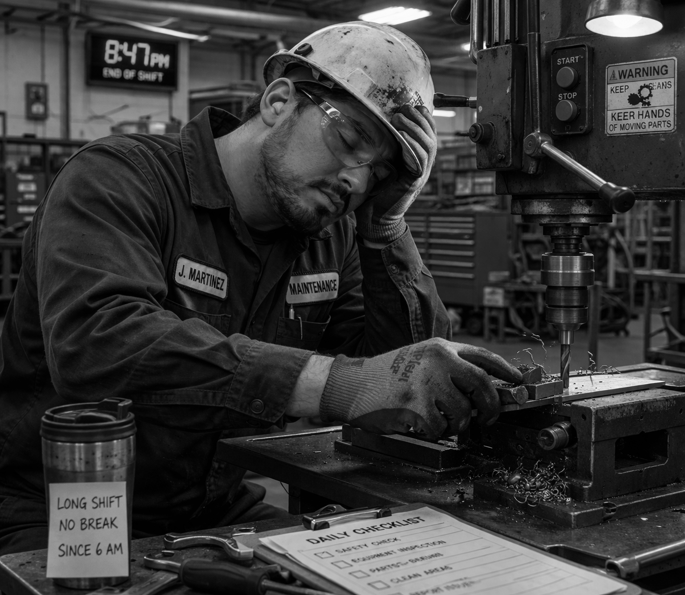
This image shows a worker near the end of a long shift, operating equipment with visible signs of fatigue. Their posture is slouched, movements are slower, and their eyes struggle to stay focused. The workstation around them shows no signs of breaks—tools are still in constant use, and the pace hasn’t slowed. Nearby, a small mistake has already started to unfold: a hand is positioned too close to a moving part, and the worker hesitates for just a fraction of a second. That moment of hesitation—barely noticeable—is enough for the situation to turn dangerous.
Fatigue doesn’t cause dramatic warnings—it builds quietly until the body and mind can’t keep up. Reaction time slows, awareness drops, and simple tasks become high-risk actions. What makes fatigue dangerous is how normal it feels right before something goes wrong. One missed step, one delayed reaction, one decision to push through instead of pausing—and a routine task can become a serious injury. Always recognize the signs of fatigue, take micro-breaks, and stop when your body tells you to. Ignoring fatigue doesn’t make you more productive—it makes you vulnerable.