Older Worker Safety: Experience Counts—So Do the Risks Picture This

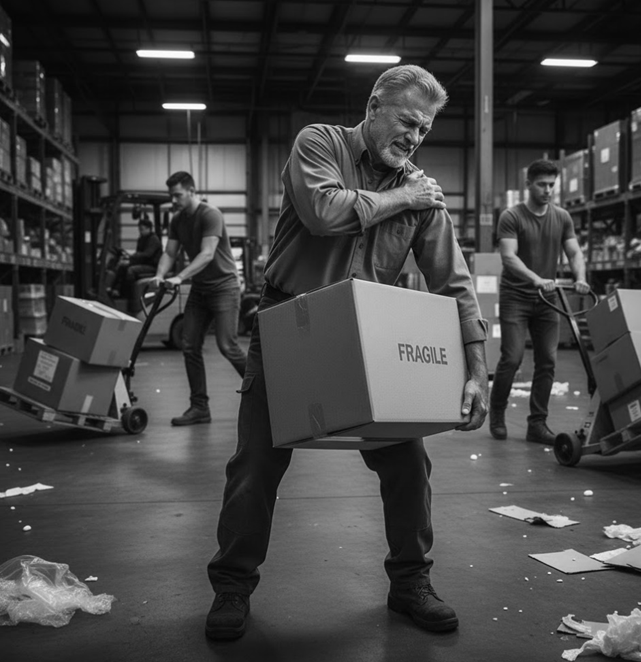
In the image, the older worker is lifting a large “FRAGILE” box with poor posture while clutching his shoulder in pain, showing he may already be experiencing strain or an existing injury. He is bending and rotating his torso under load—movements that put even more stress on aging joints and muscles. Around him, younger workers are moving quickly with pallet jacks, creating a fast-paced environment he may struggle to keep up with. This combination of physical strain, pace pressure, and reduced ergonomic support increases the risk of musculoskeletal injuries for older workers.
Older workers benefit from ergonomic tools such as lift tables, carts, team lifts, and mechanical assist devices to reduce strain on joints and shoulders. Supervisors should match workloads to physical capability, provide micro-breaks, and ensure tasks don’t require awkward lifting or twisting. A slower, safer pace and proper warm-up routines can help reduce injury risk. Leveraging experience while adjusting physical demands ensures older workers stay safe, productive, and valued on the job.