PPE Doesn’t Replace Thinking: Human Behaviour AND Gear Picture This

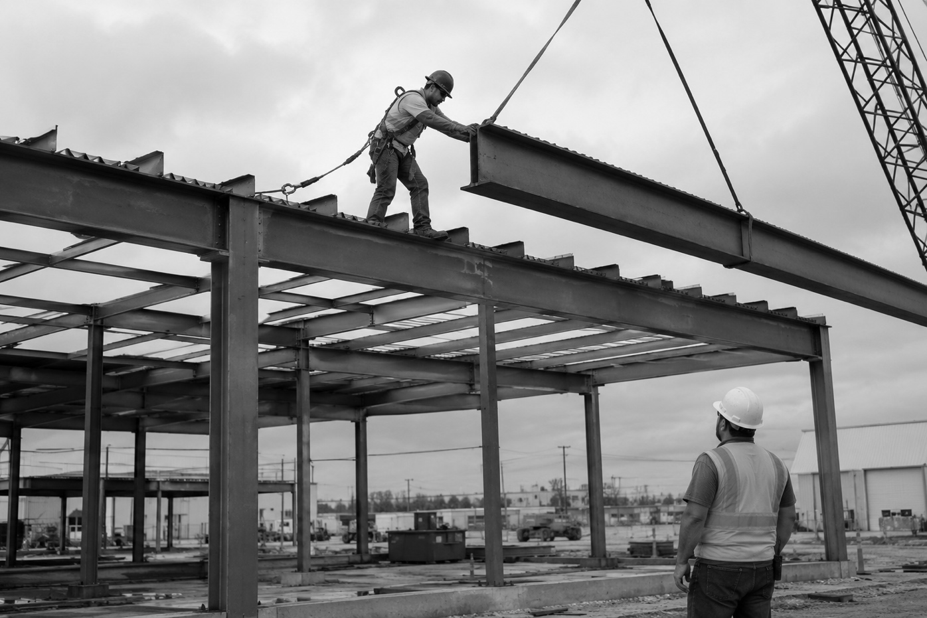
This image shows a steel construction site where a worker is walking along the upper frame of a building’s metal structure, guiding a large I-beam into position. He is wearing a safety harness and his lanyard is clipped to an anchor point above him. What is not visible to the worker — or to anyone else on the crew — is that the lanyard currently attached to his harness is a standard model not rated to resist sharp edges, and the frame he is working on has exposed metal edges running along the top chord. A supervisor on the ground is watching the beam placement. No one has assessed whether the fall arrest equipment selected for this job is appropriate for the specific conditions of this structure.
The worker in this image is doing everything that looks right. He showed up. He put on his harness. He clipped in. But PPE is not a checklist item — it is a decision that must match the specific hazard of the specific task. A safety line that would perform perfectly on a wood-framed structure can be severed in an instant by a sharp metal edge. Wearing PPE and wearing the right PPE for the job are two completely different things. Before any task begins at elevation, the question is not only “is everyone clipped in?” — it is “is the equipment we selected capable of protecting workers from every hazard they will actually encounter up there?”