Preventing Hero Culture: When Good Intentions Create Risk Picture This

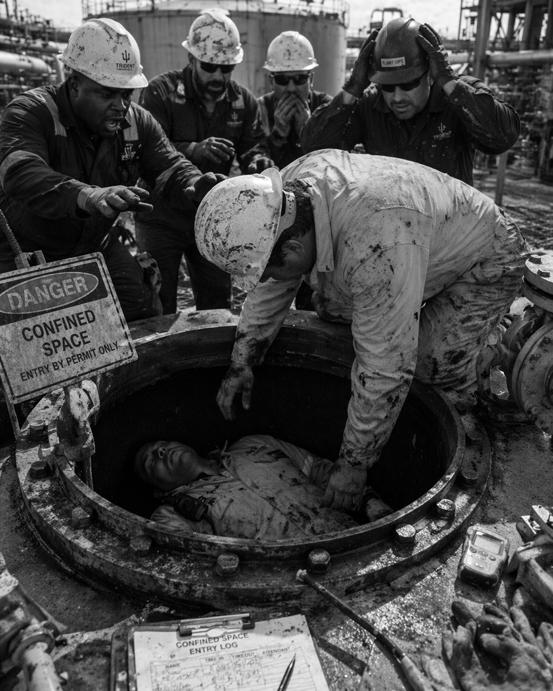
This image shows a worksite where a routine task has suddenly gone wrong. One worker lies unresponsive inside a confined space tank, while another stands at the opening, visibly alarmed. Without hesitation, the second worker climbs in, driven by urgency to help. There is no harness, no air monitoring device, no rescue line in place—just instinct and pressure to act quickly. Nearby, other workers gather, unsure what to do, watching as the situation escalates. The equipment is still, the space looks calm—but the hazard inside is invisible and already taking effect.
In moments like this, good intentions can turn deadly. Unplanned rescue attempts are one of the leading causes of multiple fatalities in confined space incidents. The second worker doesn’t go in to take a risk—they go in to save a life—but without proper protection, they become the next victim. These incidents happen fast, and there is no time to react once exposure occurs. The only safe response is a planned one: stop, assess, use trained rescue procedures, and never enter a hazardous space without the right controls. In safety, acting fast is not the same as acting right.