Seasonal Work: Summer Heat, Winter Cold, Shoulder-Season Variability Picture This

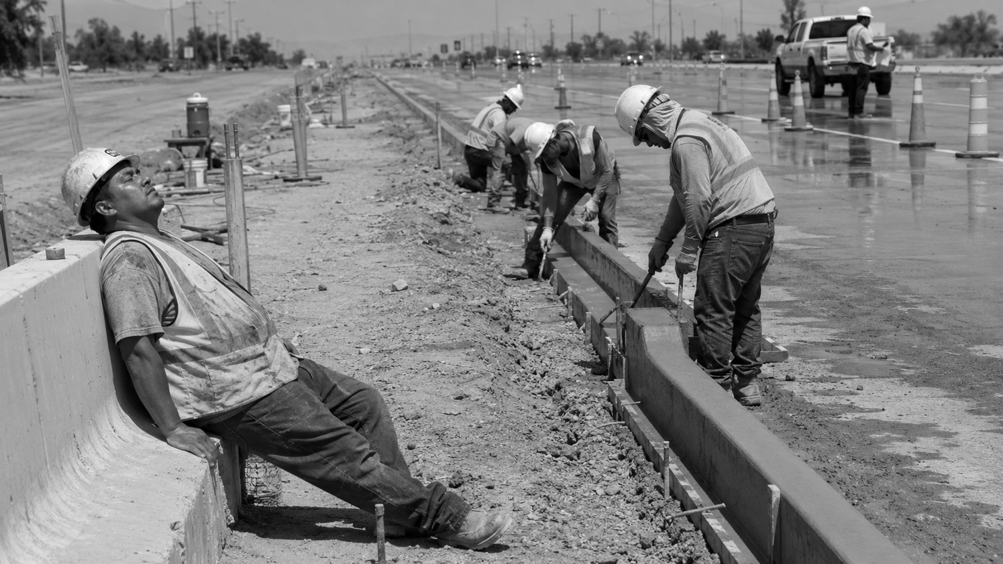
This image shows an outdoor construction site at midday in summer. A crew is hand-forming concrete curbs along a roadway under direct sun with no shade structure, canopy, or covered rest area anywhere in sight. The pavement radiates heat. One worker has stopped and is leaning against a barrier, staring blankly ahead, his hard hat slightly off-center. A coworker glances at him but keeps working. A water cooler sits at the far end of the work zone, too distant to reach quickly. No rest break has been called. The heat index is 107 degrees.
What is unfolding here does not look like an emergency yet — and that is exactly the danger. Heat stroke does not always announce itself dramatically. A worker who begins stumbling, speaking incoherently, or stops sweating in extreme heat is already in a life-threatening situation requiring immediate action. Water, shade, and scheduled rest breaks are not optional comforts on a hot day — they are the controls that keep workers alive. When the heat index climbs into dangerous territory, a disoriented worker is a medical emergency, not a productivity issue.