Supply-Chain Hazards: Global Inputs, Local Impact and Hidden Risks Picture This

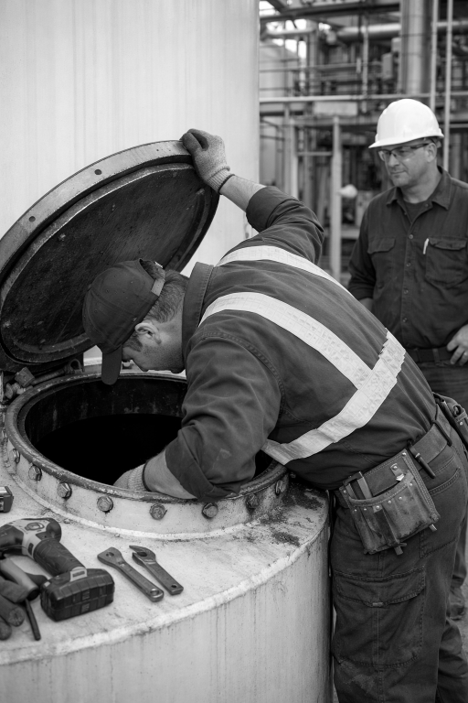
This image shows a worker opening a large storage container or tank to begin a routine task, unaware of what is inside. There are no warning labels clearly visible, no gas monitor in use, and no ventilation system running. As the worker leans in, another coworker stands nearby, assuming the area is safe because it has been used before. The environment looks normal—no visible smoke, no strong smell—but the danger is already present. Tools are ready, work is about to begin, and no one has stopped to verify what hazards may be hidden inside the space.
In workplaces involving materials, containers, or incoming supplies, the most dangerous hazards are often invisible. Toxic gases, chemical residues, or unknown substances can be present without any obvious sign. Workers may rely on assumptions instead of testing, skip hazard identification steps, or trust that “it was safe last time.” That’s when incidents happen. One breath in a contaminated space, one untested material, one missed verification—and the result can be immediate and fatal. Always identify materials, review safety data, test the atmosphere, and never assume a space or substance is safe.