Supply-Truck Safety: Blind Spots, Loading Zones and Pedestrian Risks Picture This

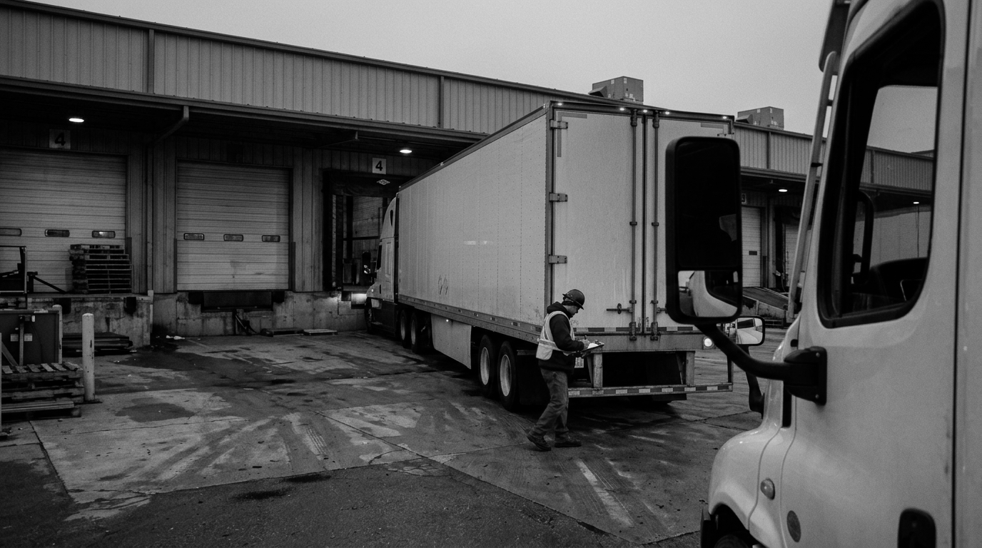
This image shows a supply truck backing into a loading dock at the usual delivery time. Workers are moving through the area the way they always do — cutting across the yard, stepping between trailers, not thinking twice because the routine feels familiar. The driver checks the mirrors: they show the dock bumper, a strip of pavement, and nothing else. What they do not show is the worker who just stepped behind the trailer to grab equipment from the other side. There is no spotter. No horn was sounded. The driver cannot see the worker. The worker cannot see the cab. For a few seconds, both are moving through the same space — and neither one knows it. The truck keeps backing.
Blind spots do not announce themselves. The trailer does not slow down for someone standing in the wrong place, and the loading zone does not stop being dangerous just because the hazard is invisible. What makes this situation so critical is how normal it looks right up until it turns fatal — no alarm, no warning, no dramatic sign that anything is wrong. One worker in the wrong place, one truck without a spotter, one moment where no one controlled the zone — and a routine delivery becomes a fatality investigation. Designate pedestrian pathways. Post a spotter before the truck moves. Treat every backing vehicle as an active hazard, every time, without exception. The loading dock does not forgive complacency.