


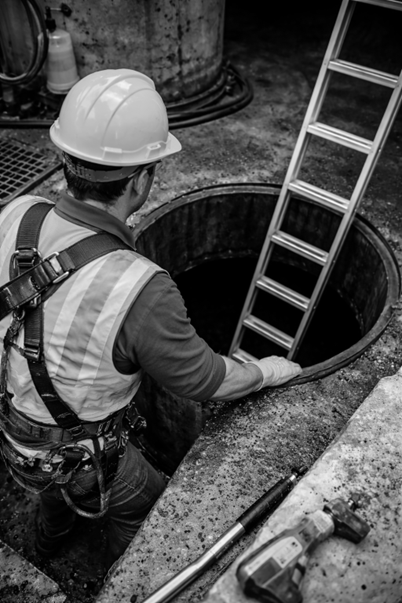
This image shows a worker standing at the opening of a confined space—such as a tank, vault, or utility pit—preparing to climb down for what seems like a routine maintenance task. The space is dark, narrow, and poorly ventilated, with only one way in and out. No atmospheric testing has been done, no permit is posted, and the worker is entering alone without a retrieval system or standby attendant. Within minutes, an invisible hazard like oxygen deficiency or toxic gas could overwhelm them without warning.
Confined spaces are some of the most dangerous work environments because hazards are often hidden and conditions can change instantly. Workers can lose consciousness in seconds from toxic exposure, lack of oxygen, or engulfment, and unplanned rescue attempts frequently result in multiple fatalities. Always identify confined spaces in advance, follow permit-required entry procedures, test and monitor the atmosphere, provide ventilation, and ensure a trained rescue plan with proper equipment is in place before anyone enters. In confined space work, preparation is the difference between a safe job and a tragedy.


