


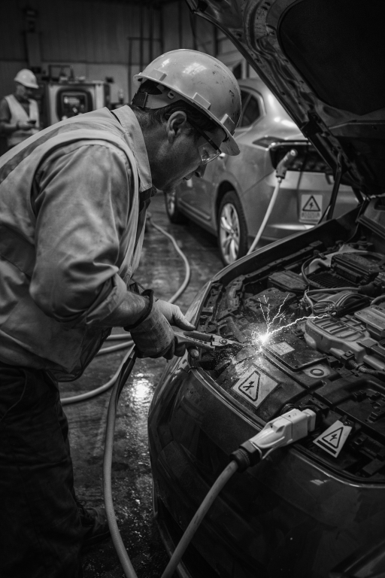
This image shows a maintenance area where an electric vehicle and charging station are being serviced. A worker is handling high-voltage components with the charging system still energized, tools in hand and no visible lockout or verification of zero energy. The charging cable is connected, lying across the floor, while another worker walks nearby, unaware of the live hazard. Warning labels are present but ignored, and there is no clear barrier or controlled work zone. The worker leans into the system, focused on finishing the task quickly, not realizing that one point of contact could complete a deadly electrical path.
In high-voltage environments, incidents don’t happen because the danger is unknown—they happen because procedures are skipped. Electricity is invisible, silent, and immediate. One missed step—failing to de-energize, not testing for absence of voltage, or working without proper PPE—can result in catastrophic injury or death in seconds. Charging systems and electric equipment carry significant stored energy, even when powered down incorrectly. Always isolate energy sources, verify zero voltage, establish controlled zones, and follow strict procedures. There are no second chances when it comes to high-voltage work.


