


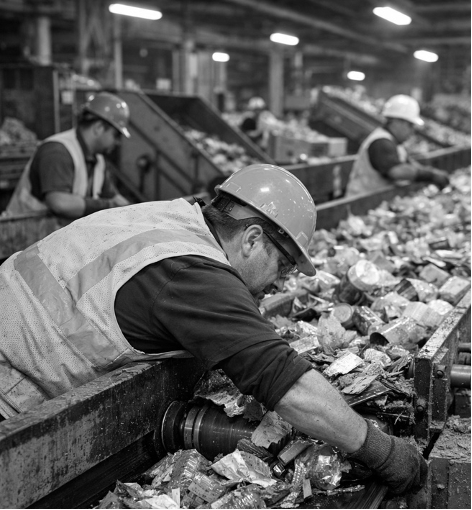
This image shows a recycling facility in full operation, where conveyor belts are moving a constant stream of mixed materials—plastic, metal, cardboard—toward sorting stations. A worker stands near one of the conveyors where materials have begun to jam. Instead of stopping the system, the worker leans in, reaching toward the moving rollers to pull debris free. The machinery continues running, with no guards in place and no lockout applied. Nearby, other workers remain focused on their tasks, unaware of how quickly the situation is escalating. Everything looks routine—but the worker’s arm is now dangerously close to the pinch point where materials are being pulled through. In recycling operations, hazards don’t wait—they move with the system. One moment of urgency, one decision to clear a jam without stopping the equipment, and the outcome can be immediate and severe. Conveyors don’t recognize mistakes—they pull, trap, and crush in seconds. What makes these incidents so dangerous is how normal they feel right before they happen. Always stop and isolate equipment, apply lockout/tagout, and never reach into moving machinery. In environments where everything is constantly in motion, safety only exists when the system is fully under control.


