


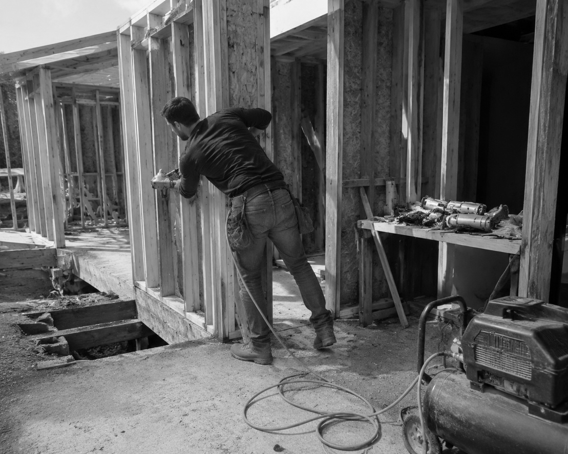
This image shows a residential framing site where a carpenter is working alone in an awkward position, reaching around the corner of a partially built wall to reattach it to an adjoining structure. He is holding a pneumatic nail gun in his non-dominant hand, angled back toward his own body so he can nail from an unusual position. He is not wearing eye protection or a hard hat. Nearby, a coil of air hose snakes across the floor, connected to a compressor running at full pressure. On a workbench in the background, a small pile of spare nail gun triggers sits next to a tool — including one trigger type that has clearly been swapped out from how it shipped. No supervisor or safety lead is present, and no signage or briefing materials related to pneumatic tool use are visible anywhere on site.
None of these details look unusual on a fast-moving job site — a worker reaching around a wall, a modified tool, missing PPE. But each one removes a layer of protection between the worker and a serious or fatal injury. A nail gun that strikes an unexpected surface can discharge instantly, and without eye protection, a worker positioned in the line of fire has no defense. Compressed air and pneumatic tools carry forces strong enough to cause permanent injury or death in a fraction of a second — never modify safety mechanisms, always wear the required PPE, and never position any part of your body in the line of fire. The few seconds it takes to check your position and your equipment can be the difference between finishing the job and not coming home.


