


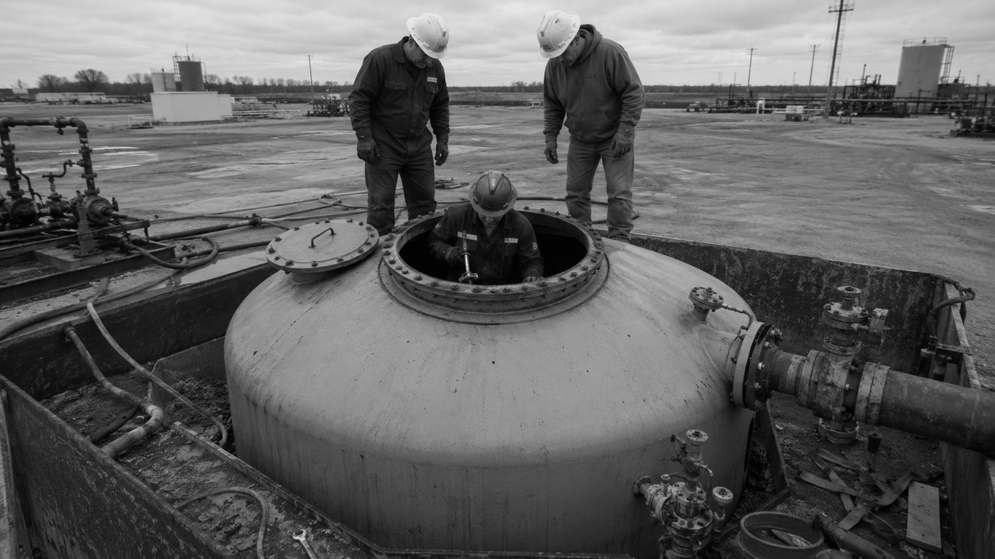
This image shows a maintenance crew at an oil and gas wellsite preparing to perform repairs on a large production water tank during a scheduled maintenance period. One worker has already climbed down into the tank through a narrow top hatch, carrying tools to fix a leaking valve at the bottom. Two coworkers stand at the opening above, watching him descend. There is no atmospheric monitoring equipment visible anywhere on site. No confined space entry permit is posted. No retrieval system, harness, or rescue equipment is staged near the entry point. The air inside the tank is invisible — and unknown.
What none of these workers can see is what the air inside that tank contains. Oxygen-deficient atmospheres, hydrogen sulfide, and other toxic gases do not have a color or a smell strong enough to warn a worker before incapacitation occurs. A confined space that has held process fluids is never assumed safe — it must be tested and proven safe before entry. During shutdowns and turnarounds, when maintenance tasks pile up and time pressure is high, permit steps get skipped and equipment gets left behind. That is the moment a routine repair becomes a fatality. No entry permit, no atmospheric test, no attendant outside — no acceptable entry. Every step of the confined space procedure exists because someone died without it.


