


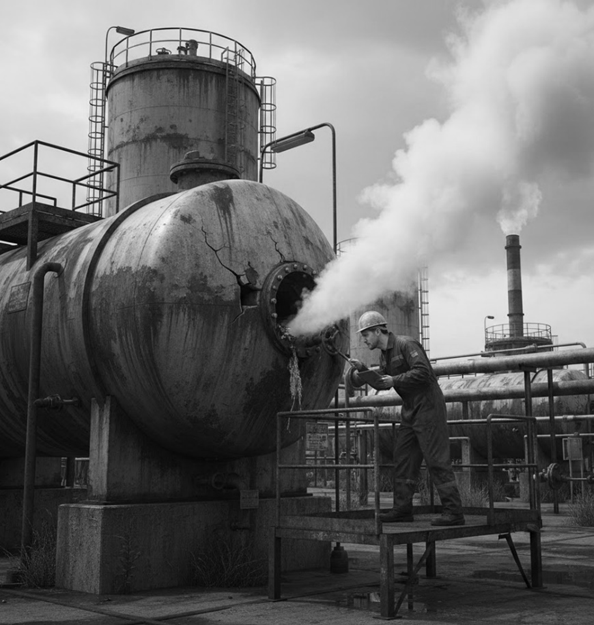
In the image, the worker is standing directly in front of a severely damaged pressure vessel that is forcefully venting steam through a cracked opening. Instead of evacuating, he is leaning in to inspect the leak with no protective equipment and no barriers in place. The tank’s corroded surface and visible structural cracks indicate long-term neglect and a high likelihood of rupture. This is precisely the type of unsafe behavior that has led to catastrophic industrial explosions in past incidents.
Workers must immediately evacuate and isolate the area when a pressure vessel shows signs of over-pressurization, leakage, or structural failure. Emergency shutdown procedures, remote pressure monitoring, and blast-radius controls should be activated while trained personnel respond from a safe distance. Regular inspections, corrosion control, and adherence to mechanical-integrity standards prevent such failures from developing. Applying lessons from past explosions ensures facilities operate safely and avoid repeating deadly process-safety mistakes.


