


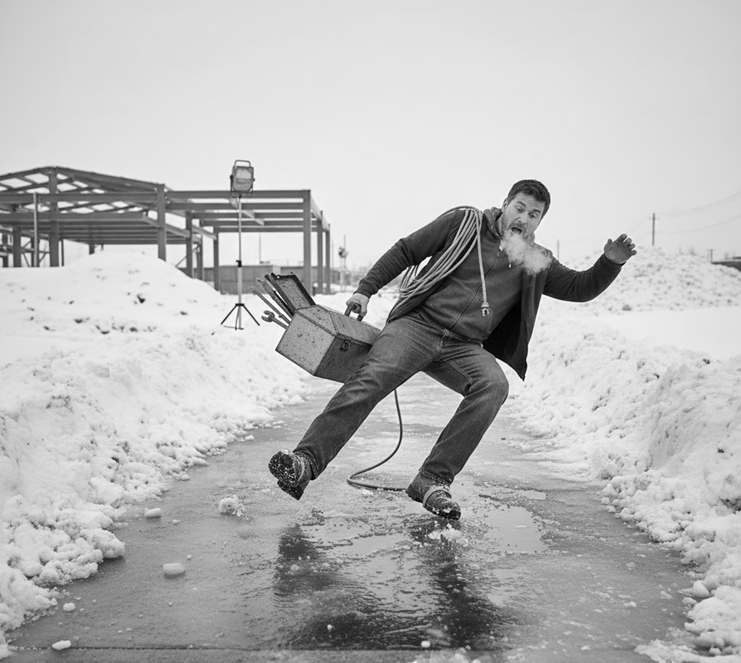
In the image, the worker is stepping directly onto a sheet of black ice while carrying a heavy metal toolbox, causing his feet to slide out from under him. He has no traction aids on his boots, no salt or ice melt has been applied to the walkway, and he’s working without proper winter PPE despite the freezing conditions. His posture shows he’s losing balance, and the swinging toolbox adds momentum that increases the chance of a hard fall. This situation reflects a combination of slip hazards and cold-weather risk factors that were not controlled.
Workers should clear ice, apply salt or sand, and use designated winter walkways before traveling through outdoor work areas. Wearing insulated boots with aggressive tread or ice-cleat attachments greatly improves traction on slick surfaces. Loads should be carried cautiously or transported using carts to keep hands free for balance. Following winter-work procedures—like slowing down, taking shorter steps, and using proper cold-stress protection—helps prevent slips, injuries, and cold-weather incidents on snowy job sites.


